

• Home
  • Wellness
  • Life&Balance
  • Healthy Planet
  • Life Tips
  • Mind&Body
logo
  • Home
  • Wellness
  • Life&Balance
  • Healthy Planet
  • Life Tips
  • Mind&Body
  • Healthy Planet

Can Eating Less Meat Really Help the Planet?

2025-12-08 By Victoria Reed

A UN report, "The Impact of Climate Change on Agriculture," points out that changes are needed in everything from farmland use and crop production to human food consumption. Otherwise, with global warming becoming increasingly severe, it will be difficult to guarantee food supplies, maintain human health, and preserve biodiversity. Therefore, one solution proposed in the UN report to address food shortages and excessive agricultural resource consumption is to reduce meat consumption. Livestock farming is a major source of global greenhouse gas emissions. According to data from the Food and Agriculture Organization of the United Nations (FAO), livestock farming accounts for 14.5% of global greenhouse gas emissions. Ruminants such as cattle and sheep release large amounts of methane during digestion, and methane's greenhouse effect is 25 times that of carbon dioxide. Reducing meat consumption can directly reduce methane emissions, thereby mitigating global warming.


Benefits of Not Eating Meat

  1. Reduced Greenhouse Gas Emissions:

Livestock farming is a major source of greenhouse gases, accounting for over 14.5% of global emissions, exceeding the total emissions from all transportation. Gases such as methane and carbon dioxide exacerbate global warming, while a plant-based diet has only a quarter of the carbon footprint of meat consumption. Reducing meat consumption can significantly lower individual carbon emissions.
  1. Resource Conservation and Pollution Reduction:

Livestock farming consumes vast amounts of water and arable land. The carbon emissions from producing 1 kilogram of beef are equivalent to driving a car for tens of kilometers. Simultaneously, the use of fertilizers and pesticides leads to soil erosion and eutrophication of water bodies. For example, reducing meat consumption can reduce nitrogen emissions by 27% to 60% and decrease the overuse of antibiotics and pesticides.
  1. Protecting Ecosystems and Biodiversity:

Deforestation for pasture (such as in the Amazon) causes carbon sequestration and habitat destruction; 70% of global Amazon deforestation is related to pasture expansion. Shifting to a plant-based diet can free up arable land for ecological restoration and enhance soil carbon sequestration capacity.
  1. Practical Impacts and Balancing Recommendations:
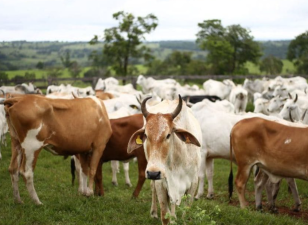
A 20% reduction in global meat consumption is a feasible goal, mitigating environmental pressure while meeting nutritional needs. UN experts recommend reducing environmental impact through dietary adjustments (such as increasing vegetable and whole grain intake), while nutrients like vitamin B12 can be obtained through supplements, avoiding the challenges of a completely vegetarian diet.


Reducing meat consumption can address excessive agricultural resource consumption

The global population growth and the trend towards high-protein diets have led to a surge in demand for food, meat, and dairy products, resulting in unprecedented levels of demand for farmland and freshwater. Therefore, one solution proposed in the UN report to address food shortages and excessive agricultural resource consumption is to reduce meat consumption.
Experts agree that livestock farming for meat consumes significantly more resources than crop production, therefore reducing meat consumption could feed a larger population.
United Nations estimates show that if the world's population changes its food composition and reduces meat consumption, by 2050 the world could save millions of square kilometers of farmland and reduce greenhouse gas emissions by 70 million to 800 million tons. It's important to note that over the past half-century, per capita consumption of cooking oil and meat has doubled, while simultaneously, 25% to 30% of the world's food is wasted.

Conclusion

Finally, reducing meat consumption by 20% is an effective goal that can alleviate environmental pressure, ensure healthy nutrition, and allow people to enjoy the satisfaction of high-quality meat.

Recent Posts

Why Protecting Wildlife Protects Us Too

Environmental Protection Is a Global Challenge

Are We Doing Enough to Reduce Plastic Waste?

Why Urban Green Spaces Matter More Than We Think

Protecting the Earth Starts With Understanding It

What Causes Poor Air Quality?

  • About Us
  • Privacy Policy
  • Terms of Use

©Copyright 2025 Wisdom Live. All Rights Reserved.